Arriving home today after four days at the 2012 Woolf conference was disorienting. This was only partly because Veronica and I drove for about an hour through heavy rain, and then came up on a slightly higher plane and a sudden shift to playful cumulus clouds who let sunshine fall through in shards and fragments. Still, when I arrived home it was in sudden mid-afternoon darkness, coming into my unfamiliar kitchen whose shape has changed almost daily and whose periwinkle blue walls are less than a week old. Home? This was home? I asked of the unfamiliar dark. The hungry cats didn't answer.
The Woolf conference itself and the Saskatoon weather must bear some responsibility for my disorientation; it wasn't simply the weather and an identity crisis caused by months of renovations. Those of us at the conference lived in the heady world of ideas, only to walk along the river back to our impersonal rooms in glorious sunshine or through grey curtains of rain, not knowing when we felt most substantial: when we were immersed in ideas or when our wet feet reminded us of our bodies. What can I tell you of the conference? First, that anything I say will be partial and incomplete. There were 42 sessions, most of these with three papers each, and five plenaries, as well as evening events. Sometimes I took notes; other times, I simply took in ideas in great draughts, luxuriating in the clearly-articulated path the reader/writer had taken. But I could say several things without feeling they were dishonest.
During the opening plenary on interdisciplinarity, Mark Hussey rightly pointed out that Woolf herself had no boundaries: she read everything, and that enormous mental library makes her work one of the richest, most complex nodes in the modernest web (to borrow a metaphor from her). There isn't anything an examination of her work won't illuminate: ethics, history, the reading of newspapers, weather, the human relationship to the environment in the early twentieth-century, the visual arts, her scientific contemporaries, human subjectivity. In that respect, this conference topic gave us particularly fertile ground to explore.
The papers I heard--written by graduate students and emerita professors--were all wonderful. So I can tell you that there is an up-and-comiong generation of young Woolf scholars who give Woolf the close readings she deserves, and pay careful, inventive attention to context. One young scholar, Sarah Dunlop, in an essay titled "Ecological Thinking in Mrs Dalloway" examined the ways Woolf critiqued outmonded scientific practices of her time. Sarah productively looked at the role of Miss Parry, who has written a book on the orchid, and noted that Clarissa's aunt is losely based on Mary Ann North, whose autobiographical Recollections of a Happy Life Woolf had read. But where Miss Parry dug orchids up to bring back, Mary Ann North drew them in situ, which implicates Miss Parry (like many of Woolf's characters) in the colonial project. Marlene Briggs from UBC looked at the motif of shoes in To the Lighthouse and connected it to a wider practice of using shoes as emblems of trauma that runs from Van Gogh to Holocaust Museums: Woolf provided a place from which we could move outward--which she would have loved. Eleanor McNees looked carefully at the way characters in The Years read newspapers. By finding the original headlines and articles, Eleanor could see how thoroughly Woolf filtered the news through character.Woolf's readers don't simply get gobbets of information to place us historically; rather we get the individual's reaction to historical events. Lesley Hankins put Lily's aesthetics side by side with snatches from Emily Carr's diaries to give us a portrait of the young modernist artist as she tries to understand her own practice. I have given these thinkers their names not particularly to draw attention to them, but because these ideas belong to real people--something I have to respect, even in a blog. That doesn't mean that there aren't dozens of unnamed people whose work has excited and inspired me. So the second thing I can say truly about the Woolf conference is that remarkable work is being done.
The third thing that was almost universally true was that papers and panels and plenary speakers were given the full support of their audience and had the value of their work described. "Thank you for that wonderful....." was often the beginning of a question or a comment. Which I think is the best way of keeping the fine work coming. This was the first Woolf Conference in Canada, and Ann Martin and her cohort of volunteers--which included quite a number of cheerful and helpful students--are to be congratulated for their fine job. Next year in Vancouver at Simon Fraser!
Sunday, June 10, 2012


Wednesday, May 30, 2012
Taking a breath
Sometimes when you've clamped on you skis and are racing down a hill that is steeper than you'd thought, life intervenes to bring you to an unsuspected plateau where you can catch your breath.
I don't think Virginia Woolf ever anticipated sending anyone racing perilously downhill, but the uninterrupted, dogged work on my book about her aesthetics had put me in a downward spiral. Though last week was productive--the chapter on To the Lighthouse is nearly finished--I felt like an old woman, unable to find the energy to do two things at once: to work on the book and to feel as if I was glad to be alive. So I was just doggedly working on the book. In fact, I felt to some degree that I simply was "the woman who worked on the book." I'm sure this is something all writers feel when they become, for good or ill, single-minded about their work.
But on Saturday afternoon, I would be reading from Soul Weather at the Cathedral Village Arts Festival, so on that glorious Friday in an otherwise grey rainy week, I got the first chapter back out to do the inevitable revisions. There are two advantages to reading from something you're working on. One is obvious: you get to experience other people's reactions and to reconsider some of your choices. The second is perhaps less obvious, and happens even before you open your mouth to read aloud. The very threat of a public reading sends you back to revision mode with a kind of seventh sense. You are forced to experience the cadences of the words in your mouth and imagine them in other people's ears. You consider what you can actually do in a brief 20 minutes. Having read a couple of essays lately on effective beginnings to novels, I looked at the first 10 pages of Soul Weather to see how well I'd managed to accomplish two contradictory things, one slow, one fast: to immerse the reader/listener in the idea-world that the novel will become, but also to involve the reader in a narrative that would make the characters and the idea-world compelling. It felt good to make some adjustments to the early pages, to get things going more quickly, and to see that for me at least the ideas still held. So thank you CVAF for putting a plateau on the side of that mountain.
On Sunday, Bill was heading for Swift Current to spend some time talking about healthy living, so I thought I'd make up for my Friday of hookey by working on Woolf that morning. To quote Winnie the Pooh, "it rained, and it rained, and it rained." I had a lovely afternoon tea with Veronica, but other than that and vacuuming up water in the basement, and making stew we could eat on Bill's return, I can't honestly remember what I did that day. Monday I got back on my horse and did a good day's revising on the Woolf book.
And then the sun came out. And renovations picked back up again, and Bill was away, so I had to be at home herding cats. (Actually, in our household we don't herd them. We call and they usually come.) I decided to take two days off Woolf, and to begin the first day with an early breakfast with my friend Katherine. Here, friendship made another plateau. She's just returned from helping out while her fourth grandchild was born and had stories. And we talked as we always do about our latest reading on the environment--two mature women with their shared hobby horse. The environment, particularly our ability to be at home on a planet whose weather we don't recognize (does the rain and cold of the last week or so ring any bells?) is one of my concerns in Soul Weather. But to quote Virginia Woolf (inevitably), who reports on painter Lily Briscoe's thoughts about Mr Ramsay's practice of philosophy, "Teaching and preaching is beyond human power, Lily suspected. (She was putting away her things.) If you are exalted you must somehow come a cropper" (39). I don't intend to teach or preach. I hope to create some drama that arouses your curiosity. I was telling Katherine that a character who entered the book about half way through was a fellow named Chris who was doing graduate work--I thought, on animal language. Katherine, who teaches a class on environmental psychology and who is far more widely read than I am, pointed out that he'd have to understand the animal in its ecosystem in order to explore its language, and that there was interesting work being done on birds. I could get a start on my reading with Trevor Herriot's Grass, Sky, Song, which was sitting on my bookshelves, waiting.
I would return after breakfast to find a carpenter putting frames around my new windows, mudding in the kitchen, and taking off the door frame into the dining room so we can get the new fridge in; to an electrician coming in the next few days; to the tile installer who would seal my new ceramic tiles. I would need to deal with finding a cat sitter and arranging delivery of the appliances. Trevor Herriot seemed like a wonderful companion, an antidote to downhill sweep of working on Woolf while I tried to organize renovations. I could do some weeding in there and think about my next quilting project, which needs to be applique rather than piecing because piecing is chaoric and I can't stand any more chaos.
So this morning, I settled down with the cats in front of the open window where I drank my coffee and watched the birds and the bicyclists and the dog walkers, and continued yesterday's reading of Grass, Sky, Song, picking up with a chapter titled "On the Air." Sitting on a porch that's become an Aeolian lyre in the wind, Herriot thinks about the work of David Abrams in his groundbreaking book of eco-philosophy. In a chapter called "The Forgetting and Remembering of the Air," Abrams describes "the Lakota and Navajo understanding of the air as the continuous and material flow that enters our bodies and consciousness in breath and thought, thereby connecting us to everything else in creation....Abram says that our language and culture are rooted in the knowledge that air is the matrix of spirit and awareness, but his larger thesis argues that language and culture arose from our sensuous immersion in the 'more-than-human' world of nature." In turn, that world of air and awareness is made manifest by the birds--by the robins across the street who seem to be almost hovering around the mountain ash, perhaps picking off its berries. "We are fascinated by birds, hold them in our esteem, because they put flesh upon, incarnate the soul of the land they inhabit, bringing it to our senses in ways that mammals, insects, or reptiles cannot match." Herriot's words and Abram's ideas were timely, not only for my thinking about Soul Weather, but for this moment of my life.
I have always thought that some of life's joys are the simplest things. One is the feeling of air on your skin. In the spring, you can almost feel the greenness of the air as it strokes newly bare arms. Later in the summer, toward evening, you might walk through a pool of cooler, damper air coming from beneath the trees mixing with the warmer, dryer air on paths and sidewalks. You are aware that the earth is breathing. Another deep pleasure, connected to my poor efforts to meditate, is the awareness of my own breath, my sense of the way my breath takes in joy as I breathe in and achieves a momentary peace as I breathe out and am profoundly still for a moment before the whole cycle begins again. And after my mother's death, I was so aware of the magic and the mystery of breathing: of how I could choose to breathe, calming and being aware of my breath, yet how for the most part of my life it simply went on without my awareness. For a while it was breathing, not a beating heart, that seemed to mark the difference between life and death.
Is this awareness of air and breath, whether seen in the dips and arcs of a goldfinch's flight or felt in one's own body, even more important for artists? In one way, I don't think so: I've always resisted the portrait of the artist as a special personage. But the double meaning of the word "inspire" has a long and undeniable history, referring to our breathing and to our inspired connection with the world. If we aren't still, don't find the time to reflect on the mystery of bird flight or on the soft regular breathing of our own bodies, if we're just hanging on as we careen down the mountain, our lives suffer and so our work suffers. When we forget to breathe, we forget to see. (Again, can't that be said for most people?) So yes, I'll be going in tomorrow to revise the Lighthouse chapter. But I'll not only be remembering to take a breath, I'll try to be mindful of all that breathing means.
Sunday, May 27, 2012
Creativity on the Street: Cathedral Village Arts Festival 2012


The Cathedral Village Arts Festival has morphed over its twenty-one years. If my memory serves me, the early festivals were largely card tables attended by craftspeople (lots of potters and jewellery makers, with a few soap makers and seamstresses thrown in for spice). Now there's more mainstream food, rather than simply the booth tended by the Immigrant Women. Mini Donuts are a staple, though now Callebaut ice cream and potato ships on a stick have been added. This year I saw it as a space where ethics could meet kitsch. There was the wind chime intended for beer drinkers (beer cans strung up), some fairly loud stained glass and original drawings for kiddies. But there were also booths like People for Animals, the Regina Farmers' Market, the Saskatchewan Writers' Guild, Bodhi Tree Yoga. The SWG wanted you to write on their wishing wall, saying what you'd like in your neighbourhood. A local film industry was a popular choice. One young woman was selling fair trade saris that had been handstitched together to make a large two-sided scarves in extraordinary colours. The clothing shop Seeds sells "sustainable style." Recycling was much in evidence, not only in the streetside bins. Grass Roots Global sells nothing but locally or imported hand-made products, many of them of recycled materials, and donates 5% of their profits to the village of Takeo in Cambodia. Another vendor had made charming baskets out of recycled newspaper--mostly the coloured comics, I suspect.
I wanted to talk to some of the artisans to see what their lives were like and to understand what their craft contributed to them. I have this sense that people who make things, even if it's socks or signs, are, simply, happier (when they're not worried about making a living or about the challenges of their craft and whether they're living up to them). My sample isn't in any way representative: I'm a blogger, not a journalist. It's also coloured by the fact that I had to find people who had a moment to talk to me. So I didn't speak with Sarah Sanderson, a jewelery artist who had come from Winnipeg and whose work with semi-precious stones, fossils, and pearls is both unique and elegant. She was understandably swamped. I'll admit, though, that I'd like to talk to her about the relationship between her new age beliefs and the inventiveness and beauty of her work. On her website, Sarah writes that she "believes that crystals are positive, energetic contributors to alternative healing and general well-being. ...It is a common occurrance to have customers 'tuning in' to the energy of her jewellery" Yet if the positive energy of crystals and semi-precious stones is the only thing that's important, she could simply put them in little velvet or leather bags that we could pin into our pockets for safe-keeping. But her designs are inventive and her craftsmanship painstaking. Beauty clearly plays a role in what she makes, yet she doesn't speak of it, as if there's no language for the utility of beauty the way there is for the utility of healing energy.

But I did speak with Rachel Krywulak, whose inviting booth contained comforting crochet scarves and funky, cheerful jewelery. Rachel is a student at O'Neill, and began making her jewelery when a close friend moved to Montreal, leaving her lonely and a little bored. She simply wants, she told me, to make people smile.

Monday, May 14, 2012
Fashionality at the McMichael Canadian Art Collection

I don't know whether I stayed an extra day in Toronto because I was clever or because the confusion of the renovations somehow infused my travel plans. But I managed to make wonderful use of the time. Sunday I began by wandering the Kensington Market Area, taking in more of the Toronto "street theatre" and even becoming part of it when two sisters (my age) were taking turns taking pictures of the other with their elderly mother in front of the house where she'd grown up; I offered my services as unofficial photographer.
Then I went on to the Gardiner Museum, trying to see the exhibits as Lee, my young ceramacist, would see them. Saskatchewan was well-represented by Vic Cicansky, Jeannie Mah, and Marilyn Levine, whose work always stuns me, no matter how much of it I see. The piece on display was one of ther leather suitcases. What's extraordinary is the way she imagines how these pieces were used by their owners. There are worn patches (patches of "worn" clay that looked remarkably like worn leather) under the suitcase's clasps, and one of the straps had been broken--the leather underneath lighter than the rest. I can't think of any artwork that more effectively captures the presence of absence, that so powerfully evokes the lives of the people Levine imagined using them, unless it's perhaps her touching, plangent worn boots.
Lee noticed a couple of things on this visit. One is that ceramic work is sometimes characterized by a kind of quest for perfection: the perfect shape, the even glaze. Ruth Gowdy McKinley threw a teapot whose round shape seems almost rounder than round, that impression strengthened by the quiet perfection of the flat pale blue glaze. In contrast are artists like Ewen Henderson, who handbuilds monumental shapes using different kinds of clay so that the firing has a differentt effect on different features, or Jean-Pierre Larocque who slab-builds monumental, craggy faces. Sometimes a ceramicist like Richard Devore throws a perfect bowl, enveloping it with a glaze worthy of Mark Rothko, but insizing the edges with little notches to remind us that the work is made by hand.

Some china from Holland that depicted street scenes prompted Lee to notice that more often than not, the decoration of ceramics gestures toward the natural world--flowers, of course, but butterflies, bugs, rabbits, and in one instance some charming goats. So there we are with an artifact that is profoundly cultural reminding us of the natural world. I wonder why? I clearly have more to learn about ceramics.

Today I worked for a while and then drove north to the McMichael Canadian Art Collection. In 1954 and 1955, Robert and Signe McMichael bought one painting by Tom Thompson and then a Lawren Harris, the beginnings of a collection of Group of Seven and aboriginal art that became the McMichael Canadian Art Collection in 1965. More recently, Robert and Signe went to court to protect their vision from being diluted or compromised by other kinds of Canadian art. They had hoped, even after giving the collection to the province of Ontario, to control and limit the collection and were deeply disappointed when they could not continue to impose their vision on the gallery's mission.
"Fashionality" is a perfect illustration of the reason why no one should have authoritative control over a collection. This exhibition explores clothing as a cultural artefact, and the artists, mostly women, found quite a variety of ways of using clothing to query our culture, our world view, and our habits. Barb Hunt's "In Thrall / Enthrall" was a claustrophobic wall full of vintage aprons that evoked, first, the labour that fifties women did in kitchens, and then the expectation that they continue to be beautiful and decorative while they did that work. Nicole Dextras' "Weedrobes" series consisted of photographs of beautiful and baroque clothing she made entirely of natural materials: a dress made entirely of lilacs, a suit made of leaves "sewn" together with thorns. Each of these was modelled in an aggressively urban setting to remind us that we are always connected to the natural world,. Natalie Purschwits' "Make Shift" was an exhibition of clothing that she had made entirely herself. She set herself the task of making everything she wore, including shoes and bras, for a year. The inventiveness is pure fun. More provocative was Camille Turner's "Miss Canadiana" performance piece, captured in a number of ways. Camille Turner is black. So her image, captured in plates and mugs in tiara and Miss Canadiana sash quickly asks us how we imagine the image of "Miss Canadiana." Videos of her visits to communities in this persona captured people's delight and discomfort when faced with an image they implicitly questioned. They come face to face with their stereotypes.
Most powerful for me was Michelle Karch-Ackerman's "The Lost Boys," which is a wall of small (10 inches or so) hand-knitted and hand-dyed sweaters with twigs through their arms that creates a collage on two gallery walls. Playing Wendy to the 733 (of 801) young Newfoundland men who died in the battle of Beaumont-Hamel, Karch-Ackerman and an army of knitters have made this small emblem of comfort. Each is knitted or dyed slightly differently; some women have used cables or patterned stitches to individualize theirs, other knitters have tucked messages inside the sweaters. With the twigs through the arms they look, just for an instant, like a sea of crosses on the gallery wall until they are once again comforting sweaters made for the Lost Boys.
Sunday, May 13, 2012
The Art of Conversation: Canadian Creative Writers and Writing Programs Conference

When I touched down in Toronto, I picked up my car and went straight to the Art Gallery of Toronto, which has not only its own remarkable collection but also a special exhibition from the Picasso Museum Paris which owns work that Picasso still held when he died. The seventeenth-century baroque mansion in which these works are housed needs renovation; in turn, they needed money to pay for the renovations and a safe place to keep the work while the renovations are undertaken. So there have been a number of travelling exhibitions, including the one at the AGO. There was method in my madness. First, the AGO is closed Monday, so I couldn't end my Toronto time there. But more importantly, I couldn't think of a twentieth-century artist more relentlessly creative than Picasso, more capable of calling our means of expression into question (paintings that are entirely blue? Why not?) and then re-inventing it (again). It seemed like a wonderful way to begin a weekend thinking about creativity. The Picasso exhibition was organized both thematically and chronologically so that you could see the development of his style along with historical events. The single painting I found most powerful was his "Massacre in Korea" (which you can find via Google Images); I had no idea this powerful commentary even existed.

But art galleries, for me, (as I've said far too many times) are also lessons in attention. I've talked about how one is prompted to see the world more attentively, with more engagement, after being in an art gallery. This time, though, that effect started up even before I got there, partly the effect of suddenly being elsewhere, partly the effect of getting ready to see. Toronto streets are theatrical in a way that Regina streets just aren't. I couldn't help trying to capture a bit of the theatre. There's doubtless a story here, either about someone moving and wondering where the friend with the truck was, or someone getting rid of past selves the way a snake sheds its skin, or someone who perhaps needs to sell some things because....who knows? It's that "who knows?" that makes it theatre.

I hadn't been to the AGO since Frank Gehry's renovations were completed, but you can see here that he also tries to get a conversation going with the street. There is a point on the fourth floor where the easiest way to get upstairs is to go outside the building and come back in, and as you do you are invited to linger and admire the skyline, reflecting on the art that is stored inside and the art that's being made, daily, in people's lives. Or the art that inspires an architect, or the art of chance that plunks a new building down on a skyline, making something entirely new. For me, there was also a conversation between these very realistic views of Toronto and the work of Jack Chambers. His paintings are realistic with a difference. You can clearly tell that the subject is a young boy watching television or a fifties family at dinner, but the expression, the handling of paint, is tender without being sentimental. The Chambers exhibition was the other highlight of the AGO for me, along with their significant Group of Seven holdings.
Interestingly, this theme of conversation also permeated the CCWWP Conference (which we've decided to call "cwip" for short). It made it so clear that teaching creative writing is quite different from teaching, say, Jane Austen. Darryl Whetter wants to talk to his students about beauty. K.I. Press, who teaches at Red River Community College and has students from diverse and sometimes rather sheltered backgrounds, wants to talk with her students about material they'd find shocking instead of censoring it with content warnings. Priscilla Uppal wants to talk to her students about the realities of the writing life. Michael Trussler, who teaches with me at the University of Regina, wants to create classes that will be attractive to both creative and non-creative students, and finds that a useful subject is poetics. They talk first about Aristotle's Poetics, and then look at twentieth-century issues for writers that Aristotle couldn't possibly have anticipated, issues like the trauma of the holocaust or the degradation of the environment, always asking the question WWAS (What would Aristotle say?). Jack Wang didn't want to walk about how good or how poor a work of writing was. He preferred to do two things. One to analyze its constituent parts: action, character, theme, setting, language. The other was to react to multiple drafts so that you can begin your commentary by talking about the reading experience and subsequently begin to make suggestions.
Many of want to talk about ethics, as if teaching in the creative writing classroom also involves us in more ethical issues than simply teaching literature--and indeed it does. Robert McGill wanted to make sure that we read our students' creative work in two ways: that we might note real-life stresses and strains, even signs of mental illness in student writing, but that we must also read the work as if it were completely invented, reading for craft, which is also to read respectfully. Meaghan Strimas talked about the ethics of writing autobiographically and described the strategies one must use when "outing" one's family. Make sure that the people you write about have a chance to read your work before you publish it. Sometimes you might even conflate the (often supposedly autobiographical) speaker and your ostensible subject so that you share the limelight, the exposure, even the critique.
Jonas Williams bravely sought to distinguish between "know what" and "know-how," perhaps inadvertently revealing that when we get together, we cwips talk more about how to conduct our classes than what to teach in them. First let me say that there were numerous concurrent sessions, sometimes as many as 6 or 7 occurring at the same time, so I missed a great deal, even though I didn't skip any sessions. So this is just an impression.
The exception was Catherine Bush, who read a very thoughtful paper called "Looking As A Writer: Ethics and Attentiveness." For Bush, looking is both ethical and aesthetic; indeed she goes so far as to suggest that the way we look at the world is an integral part of our style. In a cacophanous world, every act of attending is an act of choice--an ethical choice, perhaps. We can choose to attend to the murder of Osama bin Laden or to the stories of the Canadian men who are Manhattan sky walkers. Our choice implies a world view.
The substantive part of the conference ended with a talk by Tim O'Brien that I can't hope to summarize. But it begin with a funny story about his son confessing that he peed into a mesh waste basket in the bathroom where his father had just installed carpet because he had two heads. One of them said "Dad's not going to like this." The other head said "Yeah, but it'll be such fun!" For O'Brian, the writer has two heads, making the writing process a conversation between our own lives and our intellects and the daydreams of the others who are our characters. Or it's a conversation between "reality," which doesn't sufficiently dramatize moral dilemmas, and the imagination which manages to seduce the reader, taking her or him beyond surrender to the reality of the story into participation in it. Quoting Picasso (perhaps he had also been to the exhibition where this was on one of the panels), he brought me weekend full circle by reminding us that "Art is a lie that helps us realize the truth."
Monday, May 7, 2012
Losing the Pears

We remain in chaos. Here's today's sample. The expert came to put in our new windows, but found two problems. First, in our tiny kitchen, he and the carpenters who are installing the cabinets would be right on top of one another. Second, the windows are two inches too big. (The first windows were smushed by a forklift in the lumber yard, so we're into special order number 3.) Then the contractor arrived with an electrician under the assumption that there was a kind of hurry-up problem about wiring. I don't know where that rumour came from. Then the plumber, who is a very professional fellow, stopped by to look at what his job was going to require tomorrow and thought that the lazy susan between the sink and the little dishwasher we're putting in wouldn't turn with plumbing in the cabinet. Through all of this, the stolid carpenters Daniel and Lino, who keep up a quiet continuous conversation in Portuguese, just keep making the cabinets more beautiful adding crown moulding and beautifully bevelled doors. It's nearly six, and Daniel and Lino are still here, and I'm not entirely sure when they will leave. They have to cut a hole in the countertop for the sink--a process Lino says can go wrong because we're re-using our almost-new sink and don't have a template.
Through all of this, I have tried to keep cooking. My new Crock Pot has been a god-send, since it will make a meal in a single dish, and I can get it going before chaos arrives in the morning. I've also been clever about choosing menus that are tasty and healthy but not complicated and don't require a lot of racing upstairs and downstairs, I discovered early on that pasta was an athletic undertaking because we haven't had water on the main floor for about 17 days. Upstairs to get water to cook the pasta in. Downstairs to cook the pasta, and while it's cooking another trek upstairs to wash the green beans. Downstairs to check the pasta. Upstairs to drain the pasta. You get the picture.
I thought that yesterday, when Veronica came for dinner, we could barbeque chicken skewers with pineapple and red pepper and that I'd bake a "Cardamom-Infused Pear Crisp" from Tim Bittman's The Food Matters cookbook. It's particularly easy because you don't even need to peel the pears, and you simply stir up the struesel in a bowl you melt butter in. The weather couldn't make up its mind, however, so grilling wasn't going to happen. And then I lost the pears. Bill and I looked high and low for the sensible place I could have put the pears. We emptied out the refrigerator. We looked in every drawer in the dining room, even though we knew they were entirely full of the dishes and mugs and cereal and plastic wrap we need to keep going through renovations. I thought perhaps I'd even taken them upstairs, chucking them in a bedroom or in the study, because after all I'd have to wash them before I cut them up. No pears. So I microwaved a quick apple crisp, and we took ourselves off to Pasta Prima for comfort food. While we were waiting for dinner, I dug into my purse for the weekend's grocery receipt and looked at the produce I'd bought. There were no pears. I know I put six pears in a plastic bag. The question is whether I left them somewhere in the produce section while I was filling a bag with apples or whether some innocent shopper got home to find six unexpected pears amongst the steak and the kale because I put them in the wrong shopping basket.
In the midst of this chaos, I was rewriting my paper on the benefits of having students with a range of skills in introductory creative writing classes, arguing that it's important that they be given the opportunity to practice creativity and that it's good for all writers to have a varied audience. But I needed to begin with an argument for the importance of creativity in everyone's lives. Picking up my green pen, getting ready to edit madly I read
I have come to see art as a culture's way of being curious about itself. Fortunately, scholars and journalists give us wonderful analyses of our society's trends, bad habits, and moments of opportunity. These, though, are always linked to fact—or should be. (Though fact seems to be having a bad time these days in our public discourse.) But we have assigned to our artists the task of being curious: being curious about our humanity, being curious about the means we have for representing and exploring that humanity and the way those very means might offer distortions or opportunities for looking at ourselves differently—for re-envisioning ourselves. We promise our artists some of our culture's most extraordinary freedoms—particularly freedom of expression at the outer limits to make dresses of meat or to publish descriptions of sexual brutality—and in return only ask that they keep our curiosity engaged, full of critique and wonder. In a time of paradigm shift—when “google” and “tweet” have become verbs that redefine our ways of communicating and our expression—we need their curiosity more than ever. In Kenneth Burke's words, society sends forth edicts and directives. Art, in contrast, sends forth counter-statements and counter-directives. It accomplishes this not necessarily by engaging in the discourse of the original political or social prompt, but through its creativity and through the imaginative, speculative space that creativity generates, encouraging us to think independently, joyfully, carefully, critically, playfully, outside the box often labelled “necessity.”
Who wrote that? Surely not that woman who didn't even recognize that she didn't have any pears to put away, much less to lose?
Never mind. They promise me water in my kitchen tomorrow.
Who wrote that? Surely not that woman who didn't even recognize that she didn't have any pears to put away, much less to lose?
Never mind. They promise me water in my kitchen tomorrow.
Sunday, April 29, 2012
Restore
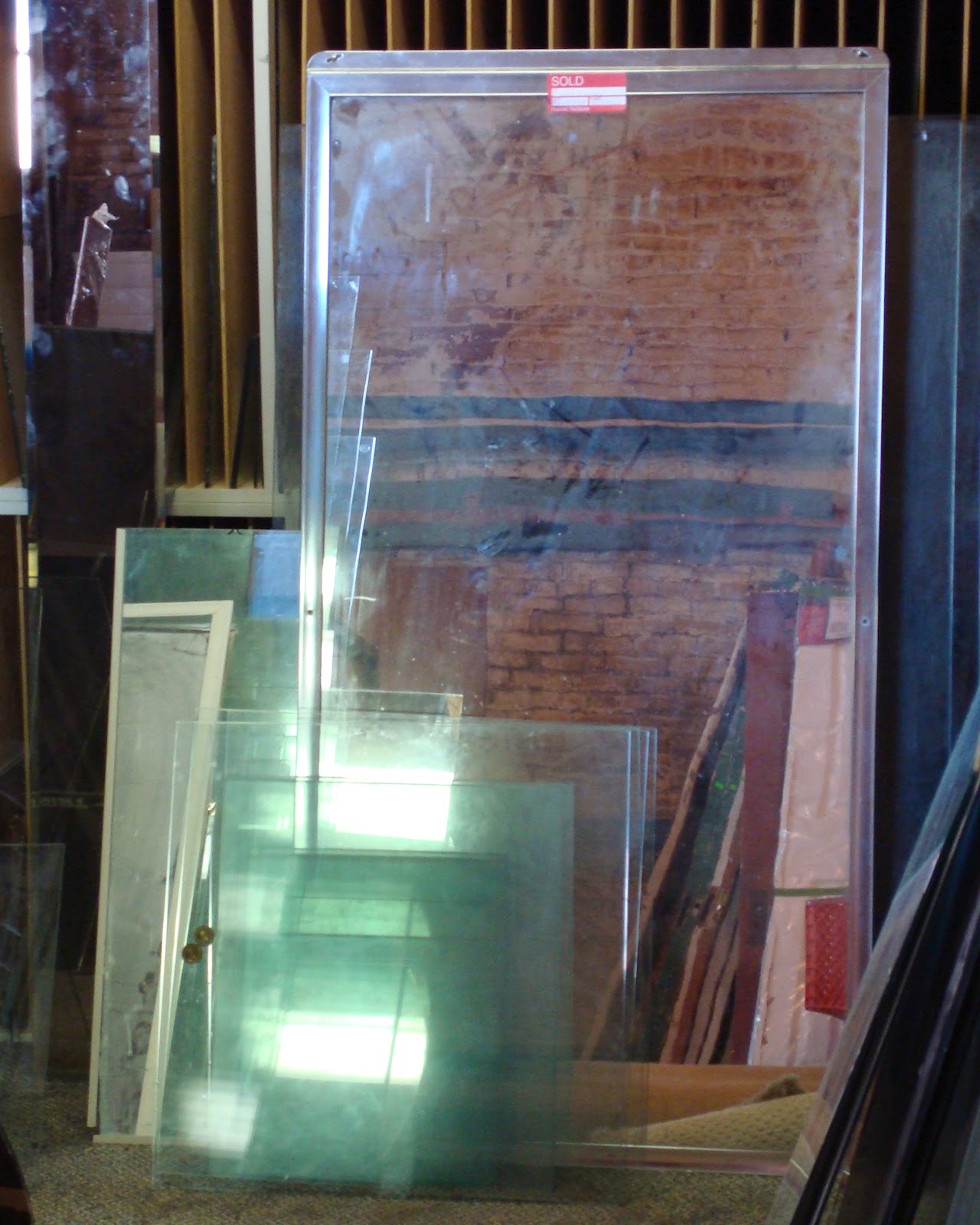
She paces among the
dust motes, the old summer doors
with the wood and
metalic clap barely echoing
among curtain rods and
oak banisters that have come unmoored.
She paces and waits for
the wind to sand the sun
free of clouds, for the
steadiness of light that streams in
like an annunciation.
When it comes
what she sees is how
eyes and light conspire
to conjure radiance,
how we become what we
see, how the reflection of bricks
makes walls out of
windows.
The moment the camera's
shutter flicks open
is a meditation on
eyes,
how even when we sleep
one eye opens inwardly,
how the thick green
layers of glass look like the sea's eyes
studying the stillness
of its own deeps.
Blood was spilled in
the blinding
of Gloucester and
Argos,
but it has been
assuaged by the families who studied
the green and gold
prairie light
through these windows,
read the pages of winter,
then lifted each pane
carefully down to pile them here.
This photograph was taken by Veronica Geminder at Restore. Here's how they describe themselves: "The ReStore sells new and used surplus building supplies (and other donated surprises) to help reduce costs for home owners, landlords, crafters, community groups and artists in Regina. The Restore is committed to solid waste management and diversion from the landfill." All of their profits to go Habitat for Humanity projects.
Veronica's photographs are inspiring a sequence of poems we are working on for Hagios Press. The poems are not, technically, instances of ekhrasis, which is essentially the verbal description of a visual object, first created by Homer in his description of Achilles' shield. Rather, I'm trying to tease out the way they talk to me, they way they have stories implicit in them that I try to find or imagine. Here I'm trying to include the making of the photograph in the poem and to explore the idea of restoration that comes from the site where the photograph was taken. I love working with them because they completely take me out of myself.
Wednesday, April 25, 2012
Habit
Monday afternoon I began cleaning out the flower beds along my front walk. The warm air on my skin, the smell and crunch of old leaves, the green fuzz of the enthusiastic flax and the blades of the early bulbs (I don't remember what I planted there!) were like Proust's madeleine. I wanted to be writing creatively, not struggling to understand Woolf's brilliance, and "nature naturing" (in Kenneth Clark's phrase about the Unicorn Tapestries), along with Facebook updates about people's marking or students' exams made me want to throw in my garden gloves and hit the keyboard.
Unfortunately, I don't think I'll have much time to work on Soul Weather this summer, though I continue to read and think about the ideas I want to explore in and weave through this novel. Just last night, sleepless, I was reading a thoughtful piece by Daniel Johnson on the Occupy Regina Facebook page about what they accomplished. Certainly I can't write about the twenty-something generation and not take this movement into account. His modest goals and gains are inspiring: if I had to sum up his sense of what they'd accomplished, it was to be a civil presence in our midst that fostered conversations about social justice and questioned our habits of thought. We were lucky in Regina to have a crew committed to civility, willing to keep their camp drug- and alcohol-free, to be a kind of drop-in centre for the homeless, and to keep Victoria Park a clean, safe place. Clearly they realized that their behaviour made their voices more credible. I'll post a link below.
Rather, I need to put all my concentration into my project on Woolf's aesthetics: there simply isn't any other way to work on this. Writing about Virginia Woolf is all-consuming. It isn't like knitting or quilting: you can't have several other projects on the go as long as you've got space to keep/hide them. Though the poems inspired by Veronica's photographs are saving my life by giving me something so vivid to respond to. I spend a large part of every Friday working on them; that day is like a circuit-breaker for me, like a thunderstorm that brings clear fresh weather behind it. So there are two sides of my mind's life right now: the daily struggle of wallowing in Woolf's work, being immersed in her diaries and essays, in the criticism, in aesthetics, trying to find a route through the complex, tangled ideas that a reader can follow. And writing poems. So in spite of the chaos of Woolf and renovations, I have a modest habit that saves me.
In fact, I've been thinking quite a bit about habit lately. I've noticed how much effect unthinking habits have on my quality of life. I barely play the piano any more. How did I get out of the habit? Why can't I get back in the habit? I've found I do much more knitting and much less quilting than I used to do. I think I understand this. Piecing is messy and chaotic. With renovations going on, I don't need messy and chaotic. Hand quilting is very zen, but if your mind is spinning, there's nothing else to concentrate on that will slow your mind down the way knitting a complicated sock or shawl will. The big question for me is whether it's easier to break old habits of to create new ones. The experts tell us that it takes six to eight weeks to really create a new habit.
When Marcel travels with his grandmother for a summer by the sea at Balbec, he thinks about habit: "As a rule it is with our being reduced to a minimum that we live; most of our faculties lie dormant because they can rely on Habit, which knows what there is to be done and has no need of their services....My habits, which were sedentary and not matutinal, for once were missing, and all my faculties came hurrying to take their place, vying with one another in their zeal, rising, each of them, like waves to the same unaccustomed level, from the basest to the most exalted, from breath, appetite, the circulation of my blood to receptivity and imagination" (319). Taken away from his perhaps over-protective mother and from Paris, Marcel finds himself, as do many of us when we go on holidays, recharged with physical and mental curiosity.
I can see exactly how this would work for Marcel's rather torpid and introspective character, but I find that habit can also liberate, can provide a structure for exploring and taking risks. My knitting and quilting habits, as long as I haven't fallen into them unthinkingly, provide way stations for thinking quietly, for letting my mind drift around in creative shoals--particularly if I knit or quilt in front of an open window where I'm just vaguely and delightedly aware of a world outside me: of stories that move by my house in cars, of children trying to walk along the stone wall at the front of my house, of birds with their desires and squirrels with their sense of play.
Yet I also see around me people who are not quite completely happy because their lives have fallen into certain habits of mind or habits of task that are safe. "Safe" and "happy" aren't necessarily compatible, and nothing is as safe as unconsidered habit. Habits, like being a workaholic or being a couch potato, can be deadly. At some level, they're an expression of who we think we are when we aren't thinking about ourselves or about what we really want but don't dare risk seeking.
Scroll down to March 14. There are also a lot of other goodies here.
http://www.facebook.com/occupyregina
Tuesday, April 17, 2012
Mrs Dalloway and the Swoopers and Bashers
I'm revising the Mrs Dalloway chapter, so I have a very clean office.
All of you who write will realize that's not really a non sequitor. Last Friday and yesterday I gave myself the whole day to work on revising the chapter, and so accomplished lots of other things, sometimes avoiding revising, sometimes doing something stupid (like rearranging two of Bill's jars of change into a jar of nickles and dimes and a jar of pennies for United Way while I put the quarters aside for parking meters) while I tried to think. I have the structure of the chapter down and most of the evidence is in place. What I need to do is to think more fully about the significance, the implications of this evidence. This is both the hardest and the most important work a writer of literary criticism needs to do. It's also rewarding when you stare at you computer monitor for fifteen minutes, type out two sentences and then tell no one who's listening "Ha!" In those moments the world suddenly opens out and I have a sense of the role of form in Virginia Woolf's work and a sense of how she wants us to engage with her text and of what puzzles she's left for us to play with.
But continuing in this way is not a very efficient use of time. I have the extra library books back to the library, the coins sorted, books returned to colleagues (sad to say I will not be reading Guy Gavriel Kay during this sabbatical), several rows done on a sock that I keep in my office to knit when I feel panic coming on. I come home on these days seriously impatient with my lack of discipline and focus. I can't go on like this, I say to myself, feeling the To the Lighthouse chapter almost ready for drafting. So today I hit on a new technique. I read Lighthouse criticism this morning--some of it startlingly good and very helpful in my discussion of Woolf's vision of the autonomous work of art, but not quite on topic--which is the best for me. After my mid-week lunch with Veronica, I gave myself two hours in my office to revise before going home to hang out with traumatized cats and do more reading. In two hours I got a lot done and didn't wander the hallways disconsolately or look at a single penny.
Sometimes I think that one of the differences between writers and non-writers isn't some gift for language or profound desire to create literature, but simply the common sense to re-make or rearrange one's writing habits when whatever you're doing isn't working. How you do this depends on whether you're a swooper or a basher, categories defined by Kurt Vonnegut in Timequake and drawn to my attention by my colleague Craig Melhof. Here's what Vonnegut says:
Tellers of stories with ink on paper, not that they matter anymore, have been either swoopers or bashers. Swoopers write a story quickly, higgledy-piggledy, crinkum-crankum, any which way. Then they go over it again painstakingly, fixing everything that is just plain awful or doesn't work. Bashers go one sentence at a time, getting it exactly right before they go on to the next one. When they're done they're done. I am a basher. Most men are bashers, and most women are swoopers. Again: Somebody should look into this.
I find his assignment of gender interesting. On one hand, he's right: I'm a woman and I'm a swooper. I need the larger shape of an argment or a plot to ground me. It's a bit like Leonardo sketching a cartoon of a painting he wants to make--though that's just a simile, not my claim to genius. Then when I know what the bigger argument is all about, I'm happy to tinker, tinker, tinker, playing with wording, creating an emphasis here, an echo there, fleshing out a summary to create a scene or reducing a lengthy scene into a brief summary. I have a mantra: the larger, grander idea I want everything to be suspended from in the most elegant and natural and light-hearted way possible.
But my daughter Veronica is a basher. Everything she writes is so densely inter-woven that she feels she can only build from the firm foundation of everything that's gone before. Here's the real difference between bashers and swoopers that I see: I have a hunch, an intuition. I've looked at the evidence or thought long and hard about my characters and my idea, and I'm willing to fly off on a wing and a prayer. It's only a draft, after all. A draft is just something you can make better. Veronica, in contrast, is very linear. Hunches aren't worth much (not even that whole JAR of pennies) in her writing universe.
Writing this, I realize that there are some times when I bash: when I'm writing poetry. Then I've got a prompt--a vision, one of Veronica's photographs, half a sentence I overheard someone utter--and I have to figure out what it means, what its significance is. I bash off a little kernel, trying to get every word right and to see where those words want to go. Then I bash off a little more around the edges to see where its balance point is, its centre of gravity. Then more careful bashing and re-bashing.
So here's this week's quandary: are you a basher or a swooper? Is Vonnegut mostly right about gender? Does your decision to bash or swoop depend on what you're writing? I'll be teaching nonfiction in the fall, so fill me in on all the various bashing and swooping you do so I can help my students find their own useful method.
Thursday, April 12, 2012
Renovations and Parents: Paring back even more
I talked to my oldest friend, Liz, who has known me since I was twenty, on Sunday night. It was my much-belated birthday phone call. Her father, with whom she is very close, has had a stroke that has left him with little ability to create new short-term memories (like the fact that he shouldn't get out of bed without his walker) and some worrying holes in his long-term memory: he still believes that his parents are alive, although he recognizes the assisted-living facility where he lives. Liz understandably feels unmoored, given the suddenness of the stroke and the way she'd depended on her father's presence. I tried to explain how our parents stay with us even when they die, but that didn't resonate with her, given her circumstances.
Right after my mother's death, I found myself left with her expressions, many of which were Janus-faced--optimistic and funny as well as dark and angry. But after several months, I found that both my parents had become presences in my life that exceeded in many ways their place over the last ten years or so. Veronica suggested that I'm not thinking of them through the glass of concern or worry or loss that dominated the ends of their lives. While the insight is Veronica's, the metaphor is mine: it's as if there was a dirty window or a mud-and-bug-strewn windshield between us. Once the worry was gone--once I stopped thinking about how we were going to get Mother calmed down to go to the doctor for one of the endless UTIs, or figure out how we were going to get Dad to eat, I could see them more clearly. Now there's a new metaphor: it's as if I look through a glass-bottomed boat almost daily, seeing memories through clear water as they float up into my experience and my consciousness.

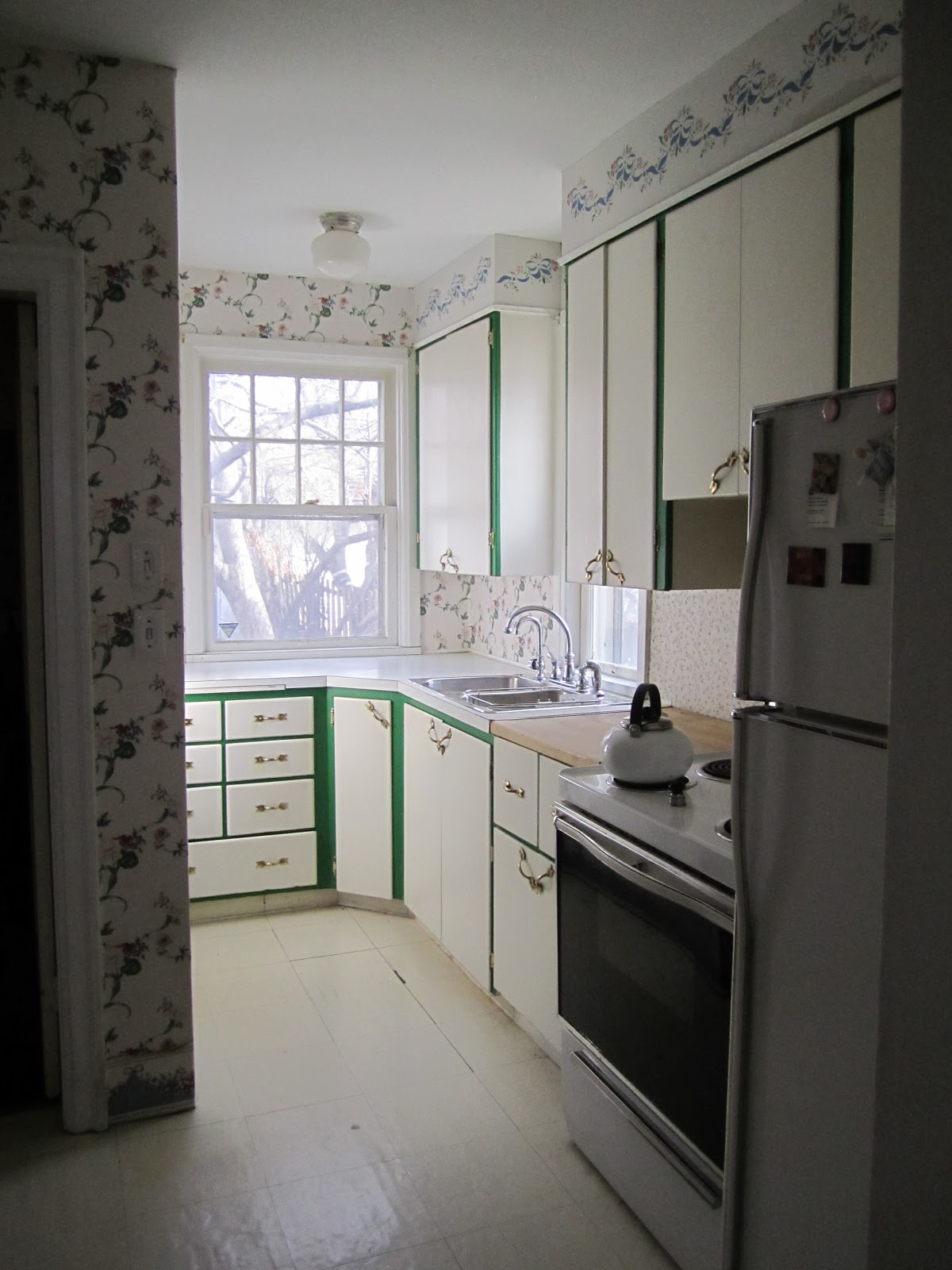
Earlier this week, we finished clearing out the kitchen for the renovation; the destruction is supposed to start this morning. I had cleaned out the buffet and the china cabinet in February to move them when the floors were done, and had purposefully not put anything back in them. Now they are my very minimal kitchen cupboards. I've taken my library of cookbooks off the shelf underneath the microsave so it can hold the ingredients I use daily--the olive oil, the rice wine vinegar, the cinnamon and baking powder. I've cleaned out drawers I hadn't looked at for twenty years. The paring back feels good.
But mostly I've been thinking about my mother. Unlike her Janus-faced expressions that echoed her view of the world--she was often depressed, but could also be enraptured by joy, curiousity, and wonder--her ability to improvise struck a single note. The need to improvise brought out her creativity and her pride in inventiveness combined with practicality.
My father was a TV repairman who was always the last person in Grand Rapids Michigan to raise his service call rates, so we lived on the edge of respectable poverty punctuated by what my mother saw as the necessities of life: trips to the library and symphony tickets. Travel was one of those necessities, part of our education. We went on vacations every year, the range of our travel determined by the family economy. But we never ate out. We had a Coleman stove, a water cooler, a large cooler and a picnic basket. Somehow my mother made three meals a day, often including a cooked breakfast (though we also loved the little boxes of cereal that were their own bowl) out of whole cloth. I don't remember grocery shopping: it was as if a whole week's necessities grew in the picnic basket and the cooler every night over night. Small toys to amuse a bored daughter magically appeared out from under the front seat of the car. Sometimes, in desperation, she paid me twenty-five cents an hour not to talk, though I could write notes. But except for her amused desperation at being locked in a car with Chatty Kathy, I don't remember her ever losing her cool. Making it up as she went along seemed to suit her during those times.
My mother's unlikely gift to me at this moment is a sense of playfulness, of improvisation. I probably made my last bread for a while on Easter weekend, but I don't see any reason I can't make fruit crisp or almond bars while we're under construction. Last night be had pork tenderloin with balsemic cranberry sauce; on Friday I'm making Morocan chicken pie. I'll make it up as I go along, which, when you think about it, is a joyful, optimistic approach to life.
Subscribe to:
Posts (Atom)