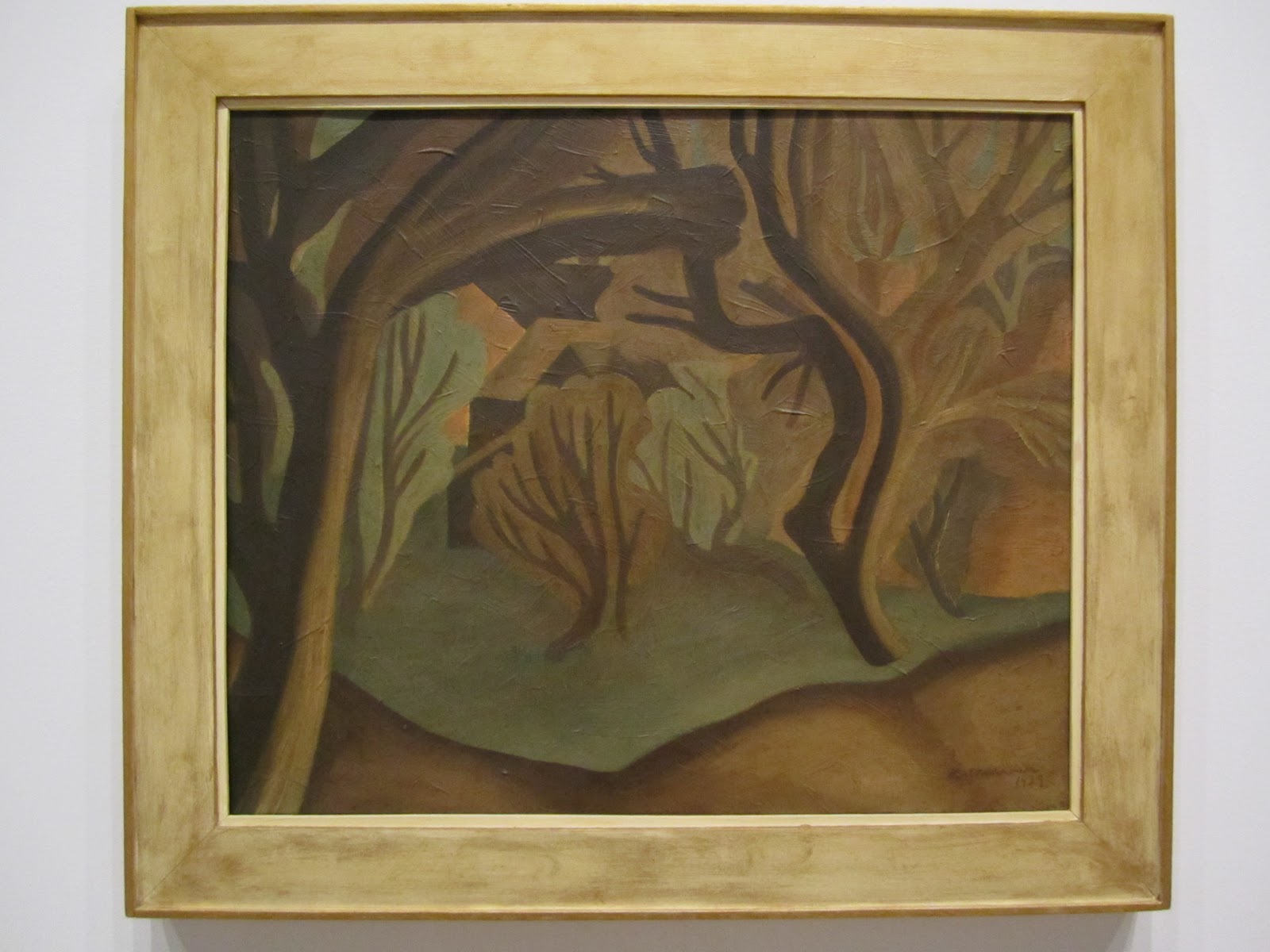
Still, I know enough physics to tell you that the old conundrum--"If a tree falls in a forest and there's no one there to hear it was there any sound?"--has no meaning as a physics problem. It's a metaphor, clearly. If we have stories but have no one to tell them to, do we exist?
Last night, you could say that Chantal Hebert talked to us about this problem in the 32nd annual Minifie Lecture at U of R. In the twitter-verse, you would think, there would be lots of voices telling their stories. But she had two observations about how our wired world now works. First, she described Rene Levesque's discussions with Quebeckers about nationalizing hydroelectric companies, travelling across the province, explaining to a wide range of Quebec communities that it was important for people to control their own resources. His careful explanations of why this was being done and what the benefits would be is in direct contrast to the response you get to a querying email from just about any federal civil servant: "The government of Canada is committed to the well-being of Canadians." Is that under 142 characters?
Her second observation is that twitter is used by a particular minority. While politicians and journalists might tweet, the person who cuts Hebert's hair or who takes her blood at the clinic doesn't tweet between clients. As a result, the twitter bubble is a mirror, not a window, something that's simply reflecting "the chattering classes"--politicians, journalists, and academics--back to themselves. Consequently, election results have been catching us off guard. Politicians and journalists (I'm not going to speak for academics!) simply don't know what the issues are for the woman who packs your groceries or the mechanic who fixes your car.
Maybe we need to revise that metaphor, then: if there's too much noise on the line, when the trees fall we can't hear them.
The Vertigo Reading Series is one of our ways of addressing this problem of the same stories being told over and over to the same cast of people. I gave a reading of Blue Duets at Crave on Tuesday night, sharing the stage with Rolli, Nicole Pivovar, and Jack Walton. Jack warmed the audience with songs he'd written on the trek between Willow Bunch and Gravelbourg; he sang of love (of course) but also of prairie skies and east coast weather. Nicole, who had never shared her work before, showed us photographs and read poems that described good friends and a little girl with cystic fibrosis who cheered her at the end of difficult days. Rolli's stories are off-beat parables; one of his used the voice of a blind old woman who managed to kill a cougar terrorizing her community. Jack introduced the second half with more music (he plays a mean guitar!) and read an essay about meeting Irving Layton and Leonard Cohen in his favourite Toronto pub. You couldn't have found four writers with a wider range of experience or styles; that's Vertigo's value to the community. It reminds us that all stories are valuable and that the sharing of varied stories is one of the ways we create a meaningful community.
Tara Solheim, who runs the series on her own and is a host who makes everyone feel comfortable and ensures that the audience is encouraged to respond, has given me information on the next two readings. On February 13, Caitlin Ward, Fionncara MacEoin, Bernadette Wagner, and Ken Fox will be reading at Crave. On March 12th, Vertigo will celebrate Irving Layton's 100th birthday with readings by Allison Kydd, Gillian Harding-Russell, Christian Drake, and Shayna Stock. Events start at 7:30.
Tara also shared with the crowd that Vertigo has lost its Saskatchewan Arts Board funding and may, as a result, have to depend on other sources, on what people put in the hat at the end of the night or even on a small attendance fee. Brown Communications gives them free posters and Crave gives them the space for free, but there are other expenses that Vertigo needs to cover.
So we need some creative thinking here. Hearing voices is a good thing: we need to preserve venues like Vertigo.